After 11 years on Hawaiʻi Island, I thought I had a pretty good understanding of what it meant to be prepared. We’ve experienced hurricane winds, flooding, earthquakes, power outages, road closures, internet outages, and plenty of days when cell service decides it has better things to do.
Most of the time, we prepare, deal with it, and move on.
Hurricane Lala was different.
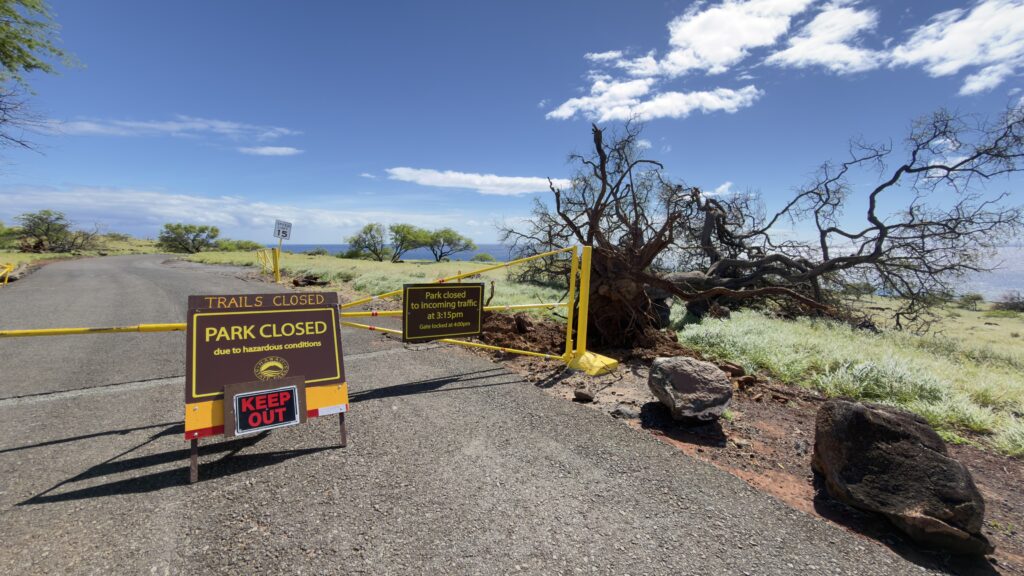
Lala never made direct landfall on Hawaiʻi Island. It passed about 35 miles offshore of South Point, but its winds wrapped around the island and caused damage in communities from north to south.
And one of the biggest things it reminded me is just how different life can be from one part of this island to another.
Here on the west side, miles away from where the hurricane passed, the impacts varied dramatically. Some areas of Kona lost power for only a few hours. In the upper elevations of Kona, including Kaloko, over 30 utility lines went down and some residents were without power and water for more than 10 days.
Waikoloa Village lost electricity for about two days. Some friends with solar battery systems barely noticed the outage. Other smaller and more rural communities, particularly toward the northern and southern ends of the island, dealt with outages lasting eight to ten days and even as I write this some are still without.
A few miles can make a very big difference here. And when the electricity goes out for more than a few hours, you quickly realize how many other things depend on it.
Electricity Is Part of the Conversation
Power outages aren’t new to us. Over my 11 years here, we’ve typically experienced several outages each year. Most are short and manageable. I usually end up cleaning the house because apparently that’s what I do when the Wi-Fi disappears and I generally enjoy a good cleaning day.
Lala was different because of how widespread the damage was and how long repairs took in some communities. People with generators, solar batteries, and other backup power systems were in a very different position from those without them.
For anyone thinking about buying a home here, backup power is something I would seriously consider. It may not be the first feature you think about when looking at a property, but after a major storm, its value becomes very clear.
Then There Was Water
This was probably one of the biggest lessons.
Many of our public water systems rely on electrically powered wells and pumps. When the storm damaged electrical infrastructure and some backup systems also failed, certain communities lost water along with electricity.
Going without power is inconvenient. Going without power and running water at the same time for days is something entirely different.
It reinforced for me why buyers should understand where their water comes from. Is the property connected to the county water system? Does it rely on catchment? Is there water storage? What happens during an extended power outage?
Those aren’t necessarily the exciting questions you think about when you first fall in love with a house, but they matter when you live here full-time.
Something as Simple as Ice Suddenly Matters
Then came the hunt for ice.
Without electricity, refrigerators and freezers only stay cold for so long. Ice quickly became important for keeping food from spoiling. But finding it depended on where you lived.
We were able to drive into Kona and find ice, gasoline, food, and other supplies. In smaller communities like Waikoloa, Waimea, and Hawi, supplies were much more limited especially ice in the first 6 days.
That experience reinforced something I think anyone considering moving to Hawaiʻi Island should understand:
Location affects much more than your view, elevation, and drive time.
A rural property may give you incredible privacy, land, and space. But you should also understand the roads, water source, electrical infrastructure, internet options, and how easily you can reach supplies when something goes wrong.
Two communities that look relatively close on a map can have completely different experiences during the same storm.
And Then There Was the Aloha
This is the part of Hurricane Lala that I don’t want to forget.
When things became difficult, people helped each other.
Friends and family checked in. Neighbors checked on neighbors. People shared information about where to find ice, gasoline, food, and supplies. Those who had power helped those who didn’t. People offered what they had.
That sense of community is something that’s difficult to explain until you experience it. We talk a lot about aloha in Hawaiʻi, and sometimes people think of it simply as a greeting. Living here teaches you that it can mean much more than that. You give when you can and never except anything in return. You share with people you don’t know because they are in need.
During a difficult week, you see it in what people actually do for one another. For those who reached out and helped, thank you from the bottom of my heart. Your call, your email, your text, helped even when that’s all you could do. I received calls from thousands of miles away offering help and from the bottom of my heart thank you!
What 11 Years Here Has Taught Me
If you’re considering moving to the Big Island, I don’t share any of this to scare you away.
I share it because living here comes with realities that don’t always make it into the beautiful photos.
Before buying a property, understand your water source. Ask about power outages. Think about backup electricity. Know your road access. Understand where your nearest supplies are. And keep enough food, water, medication, fuel, and basic necessities on hand to be self-sufficient when the island throws something unexpected at you.
Because eventually, it probably will. Would I still choose to live here? Absolutely!
Natural disasters happen everywhere. Hawaiʻi Island simply comes with its own set of challenges, and after 11 years, I’ve learned that being prepared is part of living here. During Hurricane Lala, we had a roof over our heads. We had food. Friends and family checked on us. Neighbors helped neighbors.
We learned where we were prepared and, maybe more importantly, where we weren’t. Next time, we’ll be better prepared.
And perhaps that’s one of the biggest lessons I’ve learned about living on this island: you prepare for the challenges, appreciate the people around you, and never take the simple things, electricity, running water, ice, or a neighbor checking in, for granted.